Beating the Lagos Traffic: How FlexDelivery24 Delivers Fast in Nigeria's Busiest Cities
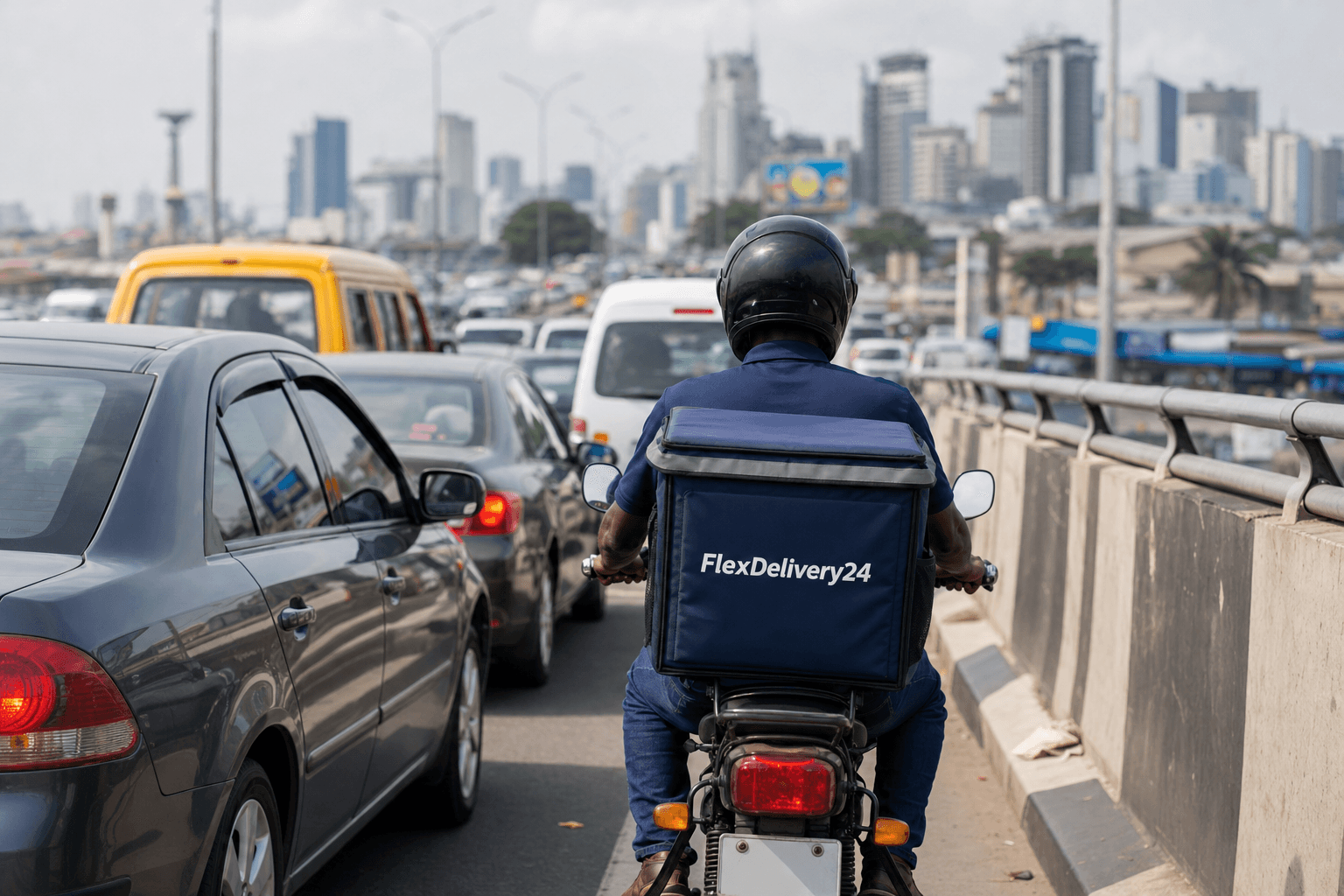
Lagos is Africa's economic powerhouse, home to over 20 million people and a booming e-commerce sector. But for logistics professionals and online retailers, Lagos represents one of the most challenging urban delivery environments on the continent. Gridlocked expressways, unpredictable flooding, and sprawling informal settlements make last-mile delivery in Lagos — and other major Nigerian cities like Abuja, Port Harcourt, and Kano — a logistical puzzle that can make or break a business. At FlexDelivery24, we've built our entire operating model around solving this exact problem. This article explores the pain points plaguing Nigerian logistics, the technologies reshaping the industry, and how FlexDelivery24 is redefining what 'fast delivery' means in Africa's most demanding markets.
The Lagos Traffic Problem: A Logistics Nightmare
According to a 2023 TomTom Traffic Index report, Lagos ranks among the top 10 most congested cities globally, with commuters losing an average of 150+ hours annually sitting in traffic. For e-commerce businesses, this translates directly into delayed deliveries, higher fuel costs, and frustrated customers.
- Unpredictable congestion: A 10km trip that should take 20 minutes can stretch to over two hours during peak periods.
- Poor road infrastructure: Many delivery routes, especially in high-density areas like Ajegunle, Mushin, and Oshodi, lack proper addressing systems, making navigation difficult even for experienced riders.
- Seasonal flooding: Rainy season (April–October) regularly submerges key arterial roads, cutting off entire neighborhoods from vehicle access.
- Security concerns: Certain routes require careful timing and route planning to avoid high-risk zones, particularly after dark.
These challenges aren't unique to Lagos — they're mirrored, albeit at smaller scale, in Abuja's rapidly expanding suburbs and Port Harcourt's congested commercial districts. For any logistics provider operating at scale, solving the 'last mile' isn't optional — it's existential.
Industry Disruptions Reshaping Nigerian Logistics
The Nigerian logistics and courier industry has undergone massive transformation in the past five years, driven largely by the explosive growth of e-commerce platforms like Jumia, Konga, and a new wave of social commerce sellers on Instagram and WhatsApp.
Key Disruptions Include:
- Rise of quick-commerce (q-commerce): Customers now expect delivery within hours, not days — a standard previously reserved for major global cities.
- Fuel subsidy removal: The 2023 policy shift significantly increased operating costs for logistics companies reliant on petrol-powered fleets, forcing innovation in route efficiency and alternative vehicles.
- Fragmented informal logistics sector: A large percentage of deliveries are still handled by informal dispatch riders with no tracking systems, leading to inconsistent service quality across the market.
- Growing demand from SMEs: Small and medium businesses now account for a significant share of delivery volume, requiring flexible, affordable logistics solutions rather than enterprise-only services.
These disruptions have created both pressure and opportunity. Companies that fail to adapt are losing customers to competitors who can guarantee speed and reliability — and this is precisely where FlexDelivery24 has carved out its competitive edge.
Technology: The Great Equalizer
Technology has become the single biggest differentiator in Nigerian logistics. The companies winning today are those investing heavily in data, automation, and route intelligence.
Innovations Driving Change:
- AI-powered route optimization: Real-time algorithms that factor in live traffic data, weather conditions, and historical congestion patterns to select the fastest possible route.
- GPS and geofencing: Enabling accurate tracking even in areas without formal street addresses, using landmark-based geolocation.
- Dispatch automation software: Matching the nearest available rider to a delivery request in seconds rather than minutes.
- Electric motorcycles and bicycles: A growing number of operators are piloting e-bikes for short-distance urban deliveries, reducing fuel dependency and easing congestion in dense areas.
- USSD and offline-first apps: Given inconsistent internet connectivity in parts of Nigeria, leading logistics platforms are building lightweight, low-bandwidth solutions that work even on 2G networks.
At FlexDelivery24, our proprietary dispatch engine integrates live traffic feeds across Lagos, Abuja, and Port Harcourt, allowing our riders to dynamically reroute mid-delivery when congestion spikes unexpectedly. This single innovation has helped us cut average delivery times by up to 35% compared to industry benchmarks.
Rising Customer Expectations in a Mobile-First Market
Nigerian consumers — particularly the youthful, smartphone-savvy population under 35 — now expect the same delivery experience as customers in London, Dubai, or Nairobi. This shift in expectation is forcing every player in the logistics value chain to level up.
What Today's Customers Demand:
- Real-time tracking: Customers want to see exactly where their package is, not just an estimated delivery window.
- Transparent pricing: No hidden fees or last-minute surcharges, especially for SME sellers operating on thin margins.
- Multiple delivery options: Same-day, scheduled, and express delivery windows that fit busy urban lifestyles.
- Reliable communication: SMS and WhatsApp notifications at every stage, from pickup to final delivery.
- Flexible payment: Cash on delivery remains dominant, but digital payment integration is rapidly growing in popularity.
A 2023 survey by the Nigeria Inter-Bank Settlement System (NIBSS) found that over 60% of online shoppers abandoned a purchase at least once due to delivery uncertainty. This statistic underscores why delivery experience — not just product quality — has become a core brand differentiator for Nigerian e-commerce businesses.
Operational Complexity: Beyond Just 'Delivering Fast'
Delivering quickly in Lagos isn't simply about hiring more riders — it requires a deeply layered operational strategy that accounts for the city's unique geography and informal economic structures.
Core Operational Challenges:
- Hub placement: Strategic micro-fulfillment hubs must be positioned across high-density zones (Ikeja, Lekki, Surulere, Yaba) to minimize travel distance for last-mile riders.
- Rider welfare and retention: High attrition rates among dispatch riders require ongoing training, fair compensation, and safety support to maintain consistent service quality.
- Address verification: With no standardized postal code system, logistics companies must build their own geocoding databases based on landmarks and customer-submitted pins.
- Inventory and warehousing: For businesses selling across multiple cities, forward-deploying inventory closer to end customers dramatically reduces delivery time and cost.
- Traffic-pattern scheduling: Smart dispatch systems schedule deliveries around predictable rush-hour windows (7–9am and 4–7pm) to avoid the worst congestion.
FlexDelivery24 has addressed these complexities by establishing a network of strategically located micro-hubs across Lagos' busiest commercial corridors, allowing us to reduce the average 'last mile' distance by nearly 40% compared to traditional centralized warehouse models.
Sustainability and Regulatory Compliance
As Nigeria's logistics sector matures, sustainability and regulatory compliance are becoming non-negotiable considerations — both for environmental responsibility and long-term business viability.
Key Focus Areas:
- Emissions reduction: With fuel costs rising and environmental awareness growing, logistics companies are exploring electric vehicles and more fuel-efficient fleet management.
- Packaging waste: Sustainable, biodegradable packaging is increasingly demanded by environmentally conscious urban consumers.
- Regulatory licensing: Compliance with Lagos State Ministry of Transportation regulations for commercial dispatch riders, including proper registration and safety gear requirements.
- Data protection: Adherence to the Nigeria Data Protection Act (NDPA) 2023, ensuring customer delivery information is securely handled.
- Rider safety standards: Mandatory helmet use, reflective gear, and insurance coverage for all dispatch personnel.
FlexDelivery24 maintains full regulatory compliance across every city we operate in, while actively piloting electric motorcycle fleets in select Lagos zones — a move we believe will become industry standard within the next five years as fuel costs continue climbing.
Real-World Impact: FlexDelivery24 in Action
Consider a mid-sized fashion retailer in Lekki shipping orders across Lagos Island and the Mainland. Before partnering with FlexDelivery24, average delivery times hovered around 48–72 hours, with frequent customer complaints about delays and poor communication. After onboarding our platform:
- Average delivery time dropped to under 6 hours for intra-city orders.
- Customer complaint rates fell by over 50%.
- Order cancellation rates due to delivery uncertainty decreased by 38%.
This transformation wasn't magic — it was the result of combining real-time route intelligence, strategically placed hubs, trained riders, and proactive customer communication. It's a model we've since replicated successfully across Abuja and Port Harcourt.
FlexDelivery24's Unique Approach
What truly sets FlexDelivery24 apart in Nigeria's crowded logistics space is our hybrid model — combining cutting-edge technology with deep, ground-level knowledge of Nigerian urban terrain.
- Hyper-local expertise: Our riders are recruited and trained within the specific zones they operate, giving them unmatched familiarity with shortcuts, landmarks, and local conditions.
- Dynamic traffic-adaptive routing: Our AI-driven dispatch system continuously recalculates optimal routes in real time.
- Scalable micro-hub network: Strategically placed fulfillment points reduce last-mile distances significantly.
- Transparent, SME-friendly pricing: No hidden costs, with flexible plans tailored to small businesses and large enterprises alike.
- Multi-channel tracking: Full visibility via app, SMS, and WhatsApp for both senders and recipients.
We don't just move packages — we solve the operational puzzle that Lagos and Nigeria's other major cities present, turning logistics chaos into a competitive advantage for the businesses we serve.
Conclusion
Lagos traffic, infrastructure gaps, and rising customer expectations have combined to create one of the most demanding delivery environments in the world. Yet within this complexity lies enormous opportunity for logistics providers willing to innovate, invest in technology, and build deep local expertise. FlexDelivery24 has positioned itself at the forefront of this transformation — proving that fast, reliable, and sustainable delivery is not just possible in Nigeria's busiest cities, but achievable at scale. For e-commerce businesses and entrepreneurs looking to thrive in this market, partnering with a logistics provider that truly understands the terrain isn't just a convenience — it's a strategic necessity. As Nigeria's digital economy continues its rapid expansion, the companies that master last-mile delivery today will be the ones leading the market tomorrow.